
Bubble Pop: Wild Rescue
Gimica GmbHPuzzle
4.44.29K Reviews
- Version
- 1.9.0
- Installs
- 1.00M
- Age Rating
- Everyone
Screenshots
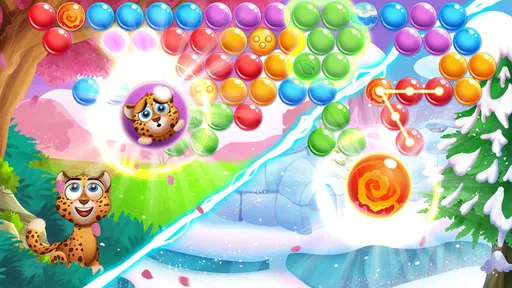
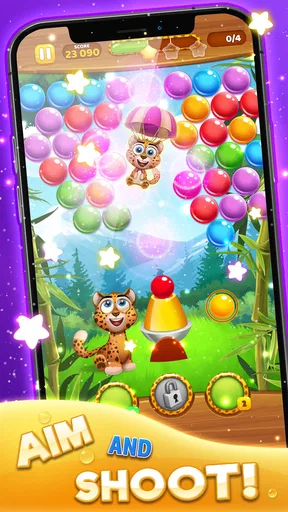
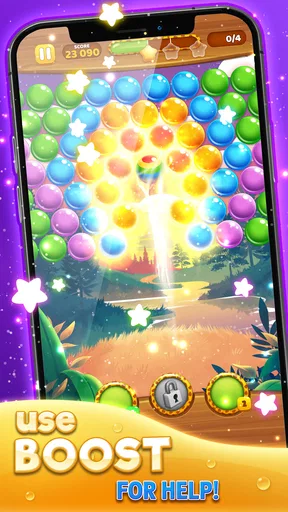
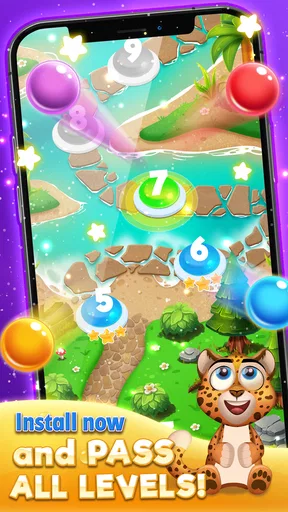
Our Review of Bubble Pop: Wild Rescue
 Analysis by Appyee
I went into Bubble Pop: Wild Rescue expecting a familiar bubble-shooting time filler, and that is largely what it is—but the animal-rescue framing gives its simple matches a warmer sense of purpose. Developed by Gimica GmbH, this free puzzle game is easy to understand within seconds: aim a colored bubble, connect matching bubbles, clear the board, and keep moving through the rescue-themed challenges. My overall impression is that it succeeds best as a relaxed, approachable game for short sessions rather than as a demanding puzzle experience.
That distinction matters. If you want a thoughtful game built around complex deduction, this probably will not replace a dedicated logic puzzler. If you want something you can open while waiting for an appointment, play without a long tutorial, and put down without losing your place in a larger story, it makes a convincing case. The combination of familiar bubble-pop rules, bright presentation, and a gentle save-the-animals theme makes it particularly accessible to casual players.
Why the basic bubble-shooting loop works
The appeal starts with the controls. Bubble-shooter games live or die by how quickly the player can understand aiming, matching, and clearing, and this one keeps that learning curve comfortably shallow. I never felt that I needed to study a complicated rule set before making a useful move. That makes it suitable for people who do not usually play mobile games, including younger players and anyone looking for something uncomplicated.
The puzzle structure also gives ordinary waiting time a clear rhythm. I can make a few shots, assess how the board changes, and decide whether to continue or stop. That is more satisfying than a game that only feels worthwhile when I can commit half an hour to it. The animal-rescue theme adds a small emotional hook to the routine: clearing bubbles feels connected to helping something on the screen, even though the core activity remains classic matching gameplay.
Its audience reach is reflected in the store’s 4.4 average from around 147 thousand ratings, while the game has passed over 1 million installs. Those figures do not guarantee that every player will enjoy it, but they do fit my experience of a polished, approachable casual title with a broad appeal. The content rating is Everyone, which matches the friendly tone and makes it an easy recommendation for households seeking a puzzle game without an intense or mature presentation.
One useful way to approach the game is to treat each session as a small concentration exercise rather than a test of long-term skill. Before shooting, I look for bubbles supporting larger clusters and consider whether removing a lower group might cause several sections to fall. That habit is more valuable than firing immediately at the most obvious matching color. Even in a simple bubble shooter, planning the order of removal can turn a messy board into a manageable one.
Small decisions matter more than fast shooting
The best moments come when I resist the urge to use the first available match. A shot aimed at a visible pair may be less useful than one that opens a route toward a larger group. Bank shots against the side can also help reach awkward areas, especially when a direct line is blocked. These are not complicated techniques, but they give the game more texture than a pure tap-and-clear routine.
I also find it helpful to pause after every meaningful board change. When a group disappears, the new arrangement can reveal a better target than the one I originally planned to hit. Players who concentrate only on the current bubble may miss those opportunities. The game is at its most enjoyable when I treat the board as something that evolves after each shot instead of as a static collection of colors.
That approach makes the title more accessible without making it completely mindless. A child can enjoy the colors and immediate results, while an experienced casual player can improve by thinking about angles, clusters, and the order of clearing. It is a modest level of strategy, but it is enough to prevent every round from feeling identical.
What makes it convenient for everyday play
For me, the strongest practical use case is the short break. I can play while commuting, waiting for food, or taking a few minutes away from work. The game does not demand the emotional investment of a competitive multiplayer title, and I do not need to remember a complicated plot to enjoy returning to it. That makes it a good choice for players who want a low-pressure distraction rather than a central hobby.
It can also work as a gentle introduction to mobile puzzles. Someone who finds traditional match-three games repetitive may appreciate the aiming element, while someone who dislikes action games may prefer the calm pace of lining up a shot. The rescue setting gives the experience a recognizable identity without overwhelming the simple mechanics.
At the same time, I would not describe it as an ideal choice for every break. If I am tired and want something completely passive, even aiming can feel like effort. Conversely, if I am in the mood for a game that constantly introduces new systems or asks me to solve elaborate multi-step puzzles, the straightforward format may feel limited. Its strength is consistency, not variety for its own sake.
The trade-offs behind the friendly presentation
The most meaningful weakness is that the familiar format can become predictable. Bubble shooting has a clear comfort factor, but it also comes with established expectations. Once I understand the basic rhythm, the surprise comes mainly from the board arrangement and the immediate challenge, not from a radically changing style of play. Players who have spent a lot of time with similar games may find the experience dependable rather than fresh.
That is not a fatal flaw, but it affects how I would recommend it. The game works better as a reliable casual companion than as a title I would choose for deep experimentation. I would happily keep it available for spare moments, yet I would not expect it to occupy the same place as a larger adventure, a competitive puzzle game, or a carefully structured brain-training app.
The free-to-play model is another consideration. The game is free to download, with in-app purchases ranging from $2.49 to $4.99 per item. That price range is important for families and for anyone who prefers to avoid spending inside games. I recommend checking the purchase settings on the device before handing it to a child, not because the game is unsuitable for younger players, but because a free download can still include optional spending.
My advice is to decide in advance whether you are comfortable playing without purchases. A casual puzzle game is easiest to enjoy when I see optional items as conveniences rather than necessities. If a player feels pressured to buy in order to maintain momentum, the relaxed appeal disappears. The best fit here is someone who can accept a slower pace and walk away from a tempting shortcut.
Another trade-off is the difference between visual reward and strategic depth. The animal theme makes progress feel more inviting, but a pleasant presentation cannot replace meaningful variation forever. I enjoyed the atmosphere as a layer over the puzzle mechanics, yet I would not choose the game solely for its theme. The shooting itself has to be satisfying, and newcomers should try it with that expectation.
How it compares with other casual puzzle choices
Compared with a typical match-three game, this title gives me more control over each move because I aim the bubble rather than swapping pieces on a fixed grid. That makes the experience feel slightly more physical and gives bank shots a role. On the other hand, players who enjoy planning long chain reactions across a board may prefer match-three puzzles, where the consequences of one swap can be more elaborate.
Compared with a traditional logic puzzle, the game is much easier to enter but usually less mentally demanding. I do not need to build a long deduction or hold several conditions in my head. That makes it better for relaxation and worse for someone seeking a serious reasoning challenge. Compared with an action game, it is calmer and more forgiving, but it lacks the speed and reflex pressure that some players want.
Those comparisons helped me define its place. I would choose it over a more complicated puzzle when I want immediate play, and over an action title when I want to unwind. I would choose something else when I want a strong narrative, competitive depth, or puzzles that keep introducing unfamiliar rules.
Who should play it—and who should skip it
I think it is a good match for casual players, families, newcomers to mobile gaming, and anyone who likes colorful matching games with a light-hearted objective. The Everyone rating supports that broad audience, and the controls are approachable enough that a player can begin without a lengthy explanation. It is also a sensible option for people who prefer short, repeatable sessions instead of games that punish them for leaving.
It is less suitable for players who dislike free-to-play mechanics, even when purchases are optional. It may also disappoint people who have already exhausted several bubble shooters and want a major reinvention of the formula. I would skip it if my priority were a story-heavy rescue adventure, an offline strategy campaign, or a puzzle game built around unusually difficult logic.
For parents, I would frame it as a simple puzzle game rather than an educational tool. It can encourage attention to patterns and timing, but I would not treat it as a substitute for a dedicated learning app. For adults, its value is mainly in the easy access and low-pressure routine. A few careful shots can provide a useful mental reset, provided the purchase model fits your expectations.
What to know before installing
The game is currently listed as version 1.9.0 and requires Android 7.0 or later. That makes the compatibility question fairly straightforward for many Android users: check the device software first, then consider whether the free-to-play format suits the intended player. Since the game is presented as a puzzle title for Everyone, the main decision is less about complexity and more about personal tolerance for repeated bubble-shooting sessions.
I would begin by playing slowly rather than chasing speed. Look for shots that remove support beneath larger groups, use the walls when a direct route is blocked, and reassess the board after each cascade. Those habits make the early experience more satisfying and help reveal whether the game has enough strategic interest for you. If the basic loop already feels repetitive after a short trial, extra content or optional purchases are unlikely to change that fundamental reaction.
One practical routine is to reserve it for specific moments instead of opening it automatically whenever you are bored. I get more enjoyment when I use it as a short break, because the simple goal feels refreshing in small doses. Longer sessions can still be pleasant, but the limited core format becomes more noticeable when I play continuously.
The developer, Gimica GmbH, has positioned the game around accessibility rather than complexity, and I think that is the right way to judge it. It does not need to be the most sophisticated puzzle on a phone to be worthwhile. It needs to make starting easy, give each shot a clear response, and provide enough small decisions to keep the routine engaging. In those areas, it generally succeeds.
My final recommendation
Bubble Pop: Wild Rescue is at its best as a friendly, low-pressure bubble shooter for short everyday sessions. I like its approachable controls, its gentle rescue theme, and the small amount of planning hidden inside an otherwise familiar format. The game gives casual players an inviting way to pass time without demanding a complicated commitment.
My reservations are equally clear: the formula may feel familiar to experienced bubble-shooter fans, and the optional purchase range means families should pay attention to spending controls. I also would not recommend it to someone looking for deep logic, a substantial story, or a constantly evolving challenge.
For the right player, though, those limitations are part of the appeal. If you want a free puzzle game that is easy to start, suitable for an Everyone audience, and comfortable to play in brief bursts, I think it is worth trying. I would recommend it to a friend who wants a cheerful distraction, with one honest condition: enjoy the shooting and the small tactical choices first, and treat the rescue theme and optional purchases as supporting elements rather than reasons to expect a completely different kind of game.
Verdict
Strengths of Bubble Pop: Wild Rescue
- Simple tap-to-pop controls make it easy for all ages to play.
- Rescue-themed levels add a clear purpose beyond matching bubbles.
- Short stages work well for quick play sessions.
- Colorful visuals and cheerful effects make the game inviting.
- Progressive challenges help maintain interest as you advance.
Limitations of Bubble Pop: Wild Rescue
- Some levels may feel repetitive after extended play.
- Difficulty can increase sharply in later stages.
- Limited strategic depth may not satisfy experienced puzzle players.
- Frequent pop-up ads can interrupt the gameplay flow.
- Extra moves or boosters may encourage in-app purchases.
Other Releases by Gimica GmbH
View All


Similar Picks in This Category
View All
Block Blast!
HungryStudio4.8

Braindom: Brain Games Test
Lahana Game Studio4.6

AMAZE!
CrazyLabs LTD4.6

Sudoku - Classic Sudoku Puzzle
Oakever Games4.7

Art Puzzle - Puzzle Games
Easybrain4.8

Amaze GO!
Oakever Games4.9
Frequently Asked Questions
What is Bubble Pop: Wild Rescue?
Bubble Pop: Wild Rescue is a casual bubble-shooting puzzle game with a wildlife rescue theme. Players aim and match bubbles of the same color to clear levels, complete objectives, and help animals along the way. The gameplay is easy to understand, but later stages introduce obstacles, limited shots, and more demanding layouts that require planning rather than random tapping.
How do you play Bubble Pop: Wild Rescue?
To play, aim the launcher toward groups of matching bubbles and release a shot to create combinations. Matching enough bubbles can clear sections of the board, trigger special effects, and help complete the level’s rescue objective. Before shooting, it is worth checking the angle, possible rebounds, and remaining bubbles, because careless moves can leave difficult groups behind or use up limited shots.
Is Bubble Pop: Wild Rescue suitable for children?
The game is generally suitable for players who enjoy colorful, simple puzzle mechanics, including many children and families. However, parents should still review the app’s age rating, advertising, in-app purchase options, and privacy information before allowing younger users to play. Difficulty can increase over time, and some children may be encouraged to request extra moves or other optional purchases.
Does Bubble Pop: Wild Rescue require an internet connection?
Basic bubble-popping gameplay may be available without a constant internet connection, which makes the game convenient for short sessions while traveling or when mobile data is limited. Nevertheless, certain features can depend on connectivity, including advertisements, rewards, updates, events, account synchronization, or purchases. Availability may also vary by device and app version, so offline access should not be assumed for every feature.
Are there in-app purchases or advertisements in Bubble Pop: Wild Rescue?
Bubble Pop: Wild Rescue may use advertisements and optional in-app purchases as part of its progression and monetization system. Players can often continue without spending money, but ads may appear between levels or be offered in exchange for bonuses, while purchases can provide boosters, lives, or other conveniences. Check the store listing and device purchase settings before downloading, especially on a shared or child-accessible device.
Play our best games!


